
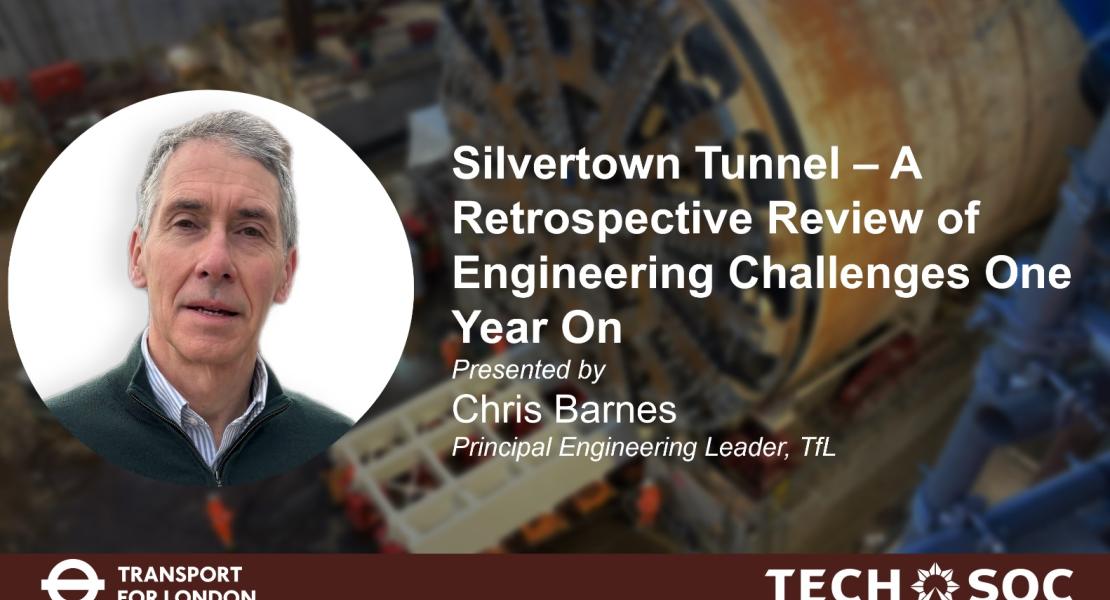
Silvertown was, and continues to be, one of TfL’s most significant projects in recent years. This is not only in terms of the sheer scale of the undertaking, but also the transport, environmental, social, and economic benefits it brings across London.
The Silvertown Tunnel is the first new road river crossing in the capital since the completion of the second Blackwall Tunnel crossing in 1967 and is a key part of the Mayor’s strategy to unlock development in the Greenwich and Royal Docks areas.
This talk will cover the technical challenges encountered during the project. The most obvious challenge was tunnelling beneath the Thames, but this was only one part of the project. There were also many less obvious challenges that ultimately proved more complex.
In addition to the physical engineering challenges, the project’s PFI form of contract had significant implications for the engineering team. I will describe how the approach had to be adapted to accommodate this, which was not always straightforward.
Chris Barnes is a Chartered Civil Engineer with over 35 years of experience delivering some of London’s most complex tunnelling and underground infrastructure projects. Chris is a Principal Engineering Leader in the TfL Deep Tube Tunnels Team. His current role is as Tunnel Engineer on the HS2 Euston Station Project.
On the Silvertown Project, Chris was the Principal Project Engineer, where he coordinated a multidisciplinary engineering team providing assurance for the new river crossing.
Chris previously worked on the Channel Tunnel, Jubilee Line Extension, Victoria Station Upgrade, Tottenham Court Road, and King’s Cross Redevelopment projects, overseeing design, construction, safety, and regulatory assurance in an operational rail environment.
He is a Member of the Institution of Civil Engineers and the British Tunnelling Society.